


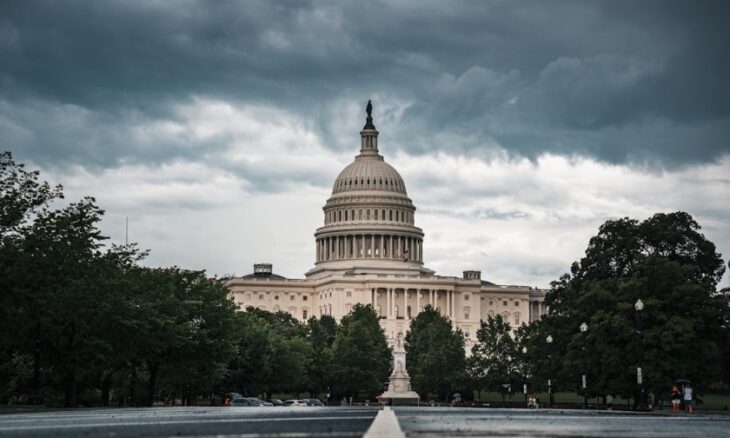
How systems are built to manage pressure and remain reliable over time
PRAY FIRST for God to grant sound judgment to those who lead in our federal government as they work to sustain institutional integrity and practice restraint in communication among those guiding institutions.
Whoever keeps his mouth and his tongue keeps himself out of trouble. Proverbs 21:23
In a constitutional democracy, institutional stability refers to the ability of governing structures to endure pressure while continuing to function as intended. Stability is not the same as rigidity. On the contrary, it reflects a system’s capacity to absorb disagreement, adapt to change, and maintain continuity over time. Stable institutions provide predictability, which allows laws to be applied consistently and decisions to be made within a recognized framework.
This continuity is not accidental. It rests on a combination of written law, established norms, and inherited practices. Laws tell us what is required, and norms guide us where the law is quiet. Traditions reinforce expectations about conduct, especially during moments of uncertainty. Together, these elements create a structure that is both defined and lived, which allows institutions to continue even as leadership or circumstances change.
American political institutions are built on the premise that conflict is a permanent feature of public life. Their purpose is not to limit disagreement but to structure it into a manageable, productive process. Through checks and balances, authority is deliberately fragmented, preventing any branch from exercising power without oversight. Legislative debate, executive review, and judicial interpretation each introduce friction into the process, slowing rapid shifts and encouraging a more deliberate pace.
A set of additional safeguards reinforces this architecture. Staggered terms help prevent sudden swings in leadership. Independent agencies offer continuity in areas that require long‑term expertise, and procedural requirements, whether committee review, public notice, or other steps, add structure to how decisions are made. These elements may seem technical, but together they slow the pace of major change and require time, explanation, and some measure of agreement before anything substantial can move forward.
Public trust is another essential part of this balance. Institutions depend not only on the authority granted to them but also on the legitimacy people believe they hold. Confidence tends to grow when citizens see processes applied consistently, decisions explained clearly, and rules enforced evenly. Transparency helps, but it isn’t the whole story; consistency, accountability, and clarity all shape how institutions are understood and judged.
When segments of the public question institutional legitimacy, the response matters. Dismissal can increase skepticism, while engagement, through explanation, openness, and compliance to procedure, can help restore confidence over time. Trust is not restored through a single action but through repeated demonstrations of reliability.
Times of difficulty often reveal where improvements are needed. Historical moments of institutional stress have led to reforms that clarified roles and improved transparency. In this way, pressure can sometimes serve as a diagnostic tool. Weaknesses, once identified, can be addressed in ways that reinforce long-term resilience rather than weaken it.
The Federal Balance Act
Public trust in the federal government remained constrained in 2025, consistent with a pattern that has persisted for nearly two decades rather than a sudden deterioration unique to the current period. A 2025 national survey conducted by the Partnership for Public Service found that 33% of Americans said they trust the federal government, while 47% said they do not and 13% expressed a neutral view. While these figures reflect a clear trust deficit, they align with a longer-term structural reality that public trust in federal institutions has not exceeded roughly 30% in most years since 2007, even during periods of economic recovery, unified government, or post‑crisis political “high points.” These trends shaped how agencies communicated and justified reforms, as administrations sought to demonstrate responsiveness and accountability.
The Government Accountability Office (GAO) took multiple steps in the last year to help reinforce institutional stability. Its 2025 High‑Risk Series highlighted vulnerabilities across 37 federal operational areas and documented $84 billion in financial benefits from corrective actions taken since 2023. GAO urged agencies to address thousands of open recommendations, emphasizing leadership commitment, monitoring, and capacity building—core components of institutional stability.
Federal law enforcement agencies faced widening gap in public trust in 2025 and 2026 due to a string of high‑profile incidents involving federal law-enforcement agents. Many believed these exposed operational weaknesses and highlight reduced training standards. These events prompted calls for improved oversight, training reforms, and transparency to stabilize public confidence in enforcement institutions.
The Federal Reserve strengthened institutional stability by increasing transparency through its Financial Stability Reports, which assessed vulnerabilities such as asset valuation pressures, household and business debt, financial‑sector leverage, and funding risks. These reports were designed to help the public understand systemic risks and the Fed’s monitoring framework, reinforcing trust through openness.
What’s next?
Looking ahead, strengthening institutions will likely depend on a few steady principles: clarity in roles, consistency in application, and openness to measured reform. Stability does not require resisting all change. Instead, it requires integrating change in a way that preserves the system’s core purpose. The public also influences how the system functions. When we look for reliable information, participate in civic processes, and approach disagreements with patience, institutions tend to work as intended.
In the end, institutional stability is not a static condition but an ongoing effort. It is maintained through design, reinforced through consistency, and sustained through public confidence. The challenge in moments of strain is not merely endurance; it is maintaining integrity while doing so.
Why It Matters and How We Can Respond
Institutional stability may seem abstract, but it shapes how decisions are made, how disagreements are handled, and how predictable public life feels over time. When systems function with stability, they create an environment where responsibilities are clearer and expectations are more reliable.
As followers of Christ, this invites a mindset of attentiveness and restraint. Scripture reminds us, “Whoever keeps his mouth and his tongue keeps himself out of trouble” (Proverbs 21:23). In conversations about institutions, especially during moments of difficulty, calm and intentional communication can help avoid unnecessary conflict and maintain a positive conversation.
Essentially, we can slow down before forming conclusions about institutional failure or success. Many processes are complex and unfold over time. Taking the time to read primary sources, review decisions, or understand procedures can lead to more grounded perspectives.
Prayer also reframes how we approach these issues. It invites us to ask for discernment for those charged with protecting institutional integrity, that their choices reflect patience and sound judgment. We can pray for ourselves—that our own participation reflects steadiness, humility, and care. “Better is a poor and wise youth than an old and foolish king who no longer knew how to take advice” (Ecclesiastes 4:13). In this way, the endurance of institutions is not only structural but also personal, shaped by the habits we bring into public life.
HOW THEN SHOULD WE PRAY:
— Pray that those in federal offices would respond with transparency and compassion during times of public stress. A fool gives full vent to his spirit, but a wise man quietly holds it back. Proverbs 29:11
— Pray that leaders and citizens alike remain open to wisdom and correction. Better is a poor and wise youth than an old and foolish king who no longer knew how to take advice. Ecclesiastes 4:13
CONSIDER THESE ITEMS FOR PRAYER:
- Pray for God to be at work in those who lead the many agencies that make up our public institutions, that they would remain steady and grounded in times of pressure.
- Pray for heads of those agencies to seek clear communication that fosters confidence rather than confusion.
- Pray for all Americans to pursue patient civic engagement shaped by careful listening.
Sources: Partnership for Public Service, Government Accountability Office, The White House, Office of Management and Budget, Congressional Research Service, Library of Congress, Pew Research Center, Federal Reserve
RECENT PRAYER UPDATES